"Exercise and recreation are as necessary as reading. I will rather say more necessary, because health is worth more than learning."
- Thomas Jefferson
FIRST THINGS FIRST:Understanding the I do, we do, you do lesson format is essential to creating effective lessons. the idea of gradual release is especially important with physical education. Not only am I responsible for teaching students important fitness and movement concepts, I am responsible for the students' physical safety in an environment that can quickly become a hazard. To the right you will find a quick video of a lesson plan that features a clear I do, we do, and you do segments. |
UNDERSTANDING MY CONTENT:
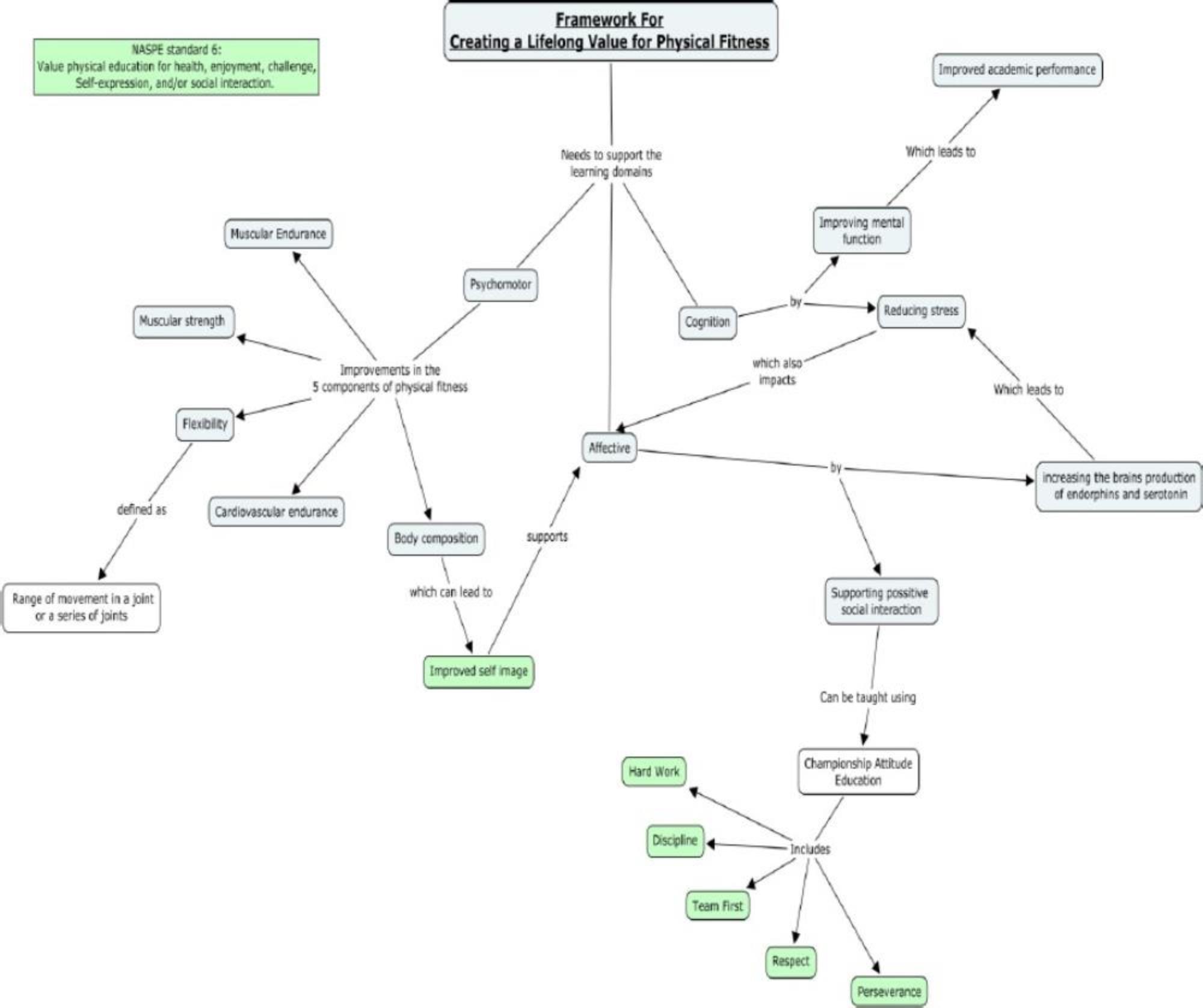
It is impossible to create an effective physical education program without first becoming familiar with all of the underlying concepts and rationales behind what we do. At the beginning of my residency I struggled to plan lessons that were truly enriching and beneficial for my students. I felt as if I would simply get a sport, break down the skills and teach them. Even though I wanted observers to see physical education in a new, academic light, I was doing little to break the stereotype. It took me really focusing my thinking through a concept map that I created during my winter term at NLU.
After I recognized my weakness in planning, I decided to focus on centering most all of my lessons around one of the most important goals for physical education teachers. This goal is NASPE standard #6, "Student will value physical education for health, enjoyment, challenge, self expression, and/or social interaction." Giving students the tools to grow into lifelong lovers of health and physical fitness is the primary job of any physical education teach, so focusing my teaching around this goal made my lessons more substantial and enriching. I included this new found focus by deciding to incorporate more rigorous health and fitness concepts into my instruction. I introduced the health related benefits of physical fitness to my students and they sorted their existing workouts into different categories that matched each specific benefit. My full planning focused paper can be found below
| I Found that the incorporation of more specific and academic vocabulary in my lessons lead to greater student retention and ownership of the fitness concepts I was teaching. I have seen a great improvement in my students' engagement during our fitness discussions. No longer do I hear students say, "we run because it is good for our hearts." No my students answer questions by saying things like, "We jog and run in order to improve our cardiovascular endurance by strengthening our hearts." The first lesson plan I used to incorporate these concepts can be found below.
|

Learning Segment A:
|
Learning Segment B:
The first topic I chose to dissect for my students was a simple movement progression. I designed this movement progression with pre-k-1st grade in mind in order to discern whether or not each of them are competent movers. I designed this progression by mapping out different tasks and activities that would help inform me of what movement stage each of my students was at (Novice, practitioner, expert). |
After creating this progression I was able to create a primary movement assessment to administer to my students. This assessment was centered on formal observations of a student performing a number of tasks. The idea behind this assessment is that the student's competency with the movements on the assessment will give educators a clear idea of the student's general movement competency.
I used the results from one of my 1st grader's assessment for this portfolio. You can find that document by clicking HERE
A full write up of this process can be found to the right |
|
PUTTING MY LEARNING SEGMENTS TOGETHER: What I learned...
Incorporating literacy skills through a K-W-L activity! | 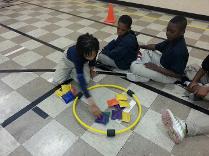 Bean bags and hula hoops were a favorite when it came to incorporating basic math skills for primary grades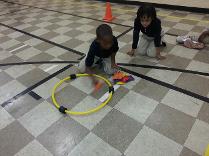 |